Here are some of the wonderful mushrooms that can be foraged in British Columbia! For possible dishes, check out our recipes page HERE
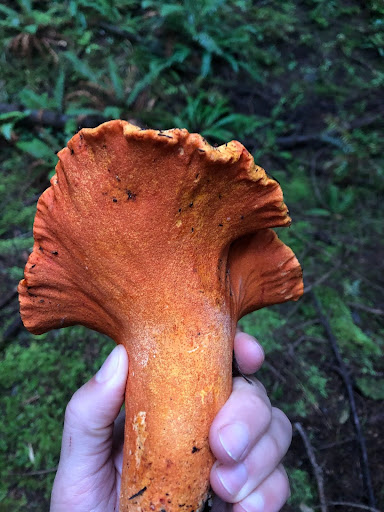
Lobster Mushroom
The Lobster Mushroom phenomena occurs when a mold-like parasite attacks a mushroom of the Lactarius or Russula species. The mushroom turns a bright orange-red colour resembling a lobster shell, and has a distinct fishy smell. When cooked, Lobster Mushrooms have a mild taste and are popular in soups and pastas.
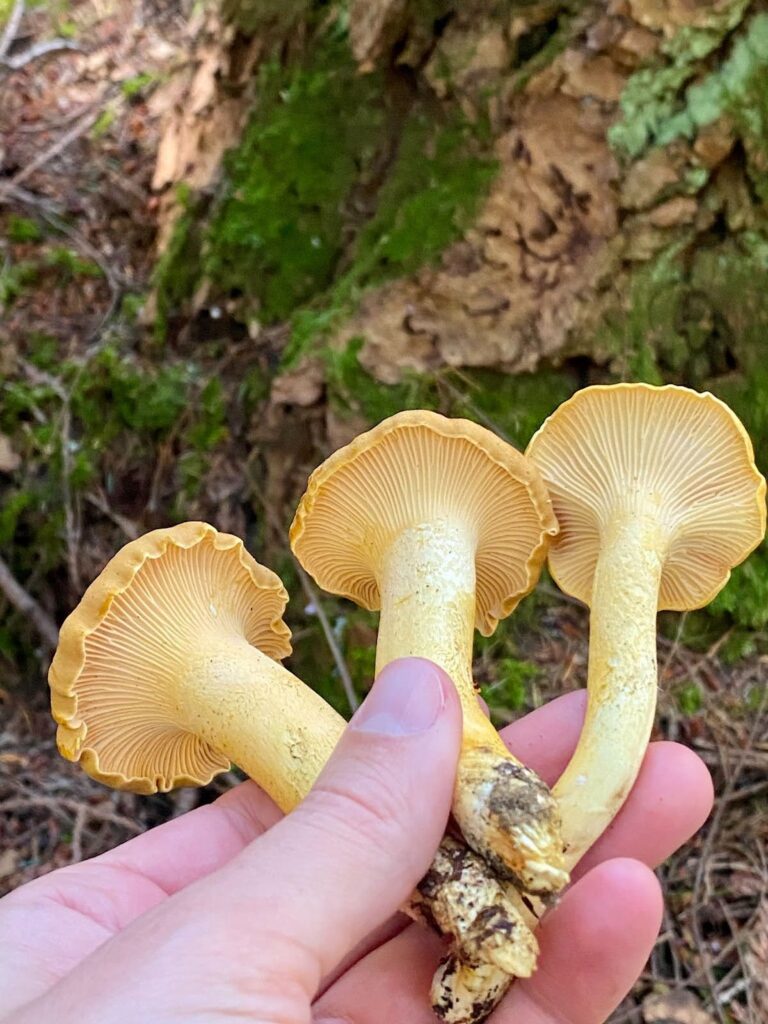
Golden Chanterelle
The Golden Chanterelle looks like a yellow funnel or trumpet. Its underside has ridges, not gills. The ridges, also called “false-gills” are more similar to veins while gills are similar to blades. This is important since the Golden Chanterelle has gilled lookalikes that are poisonous.
The Golden Chanterelle is a very popular mushroom to forage. It has a faint sweet or fruity aroma, and is often sauteed or grilled and added to pastas or pizza.
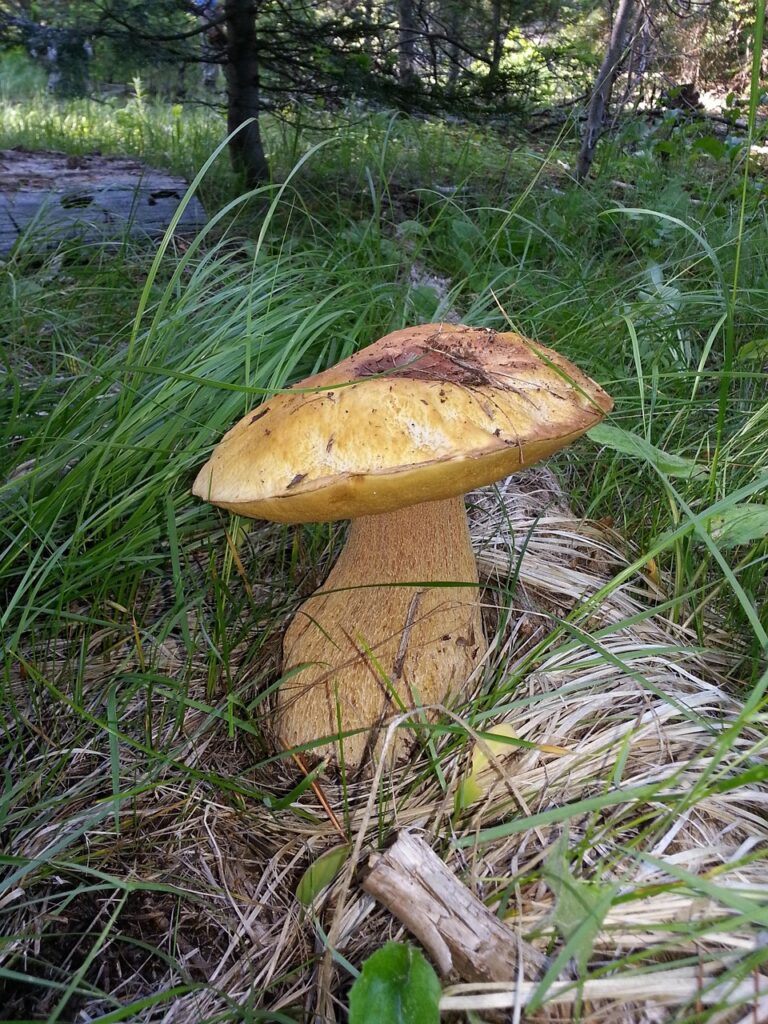
King Bolete
The King Bolete is a gourmet mushroom. Its underside has small, round pores that are white when young and yellow-brown as it ages. This mushroom has some lookalikes in the Bolete family, so it is important to consult a guide and pay attention to the colour of the cap, stem, pores, and spores.
The King Bolete has a nutty or meaty flavour and no distinctive odour. They have a very short lifespan before they go bad, but they can be easily preserved by drying or freezing. They are popularly sauteed in butter, to best enjoy their unique flavour.
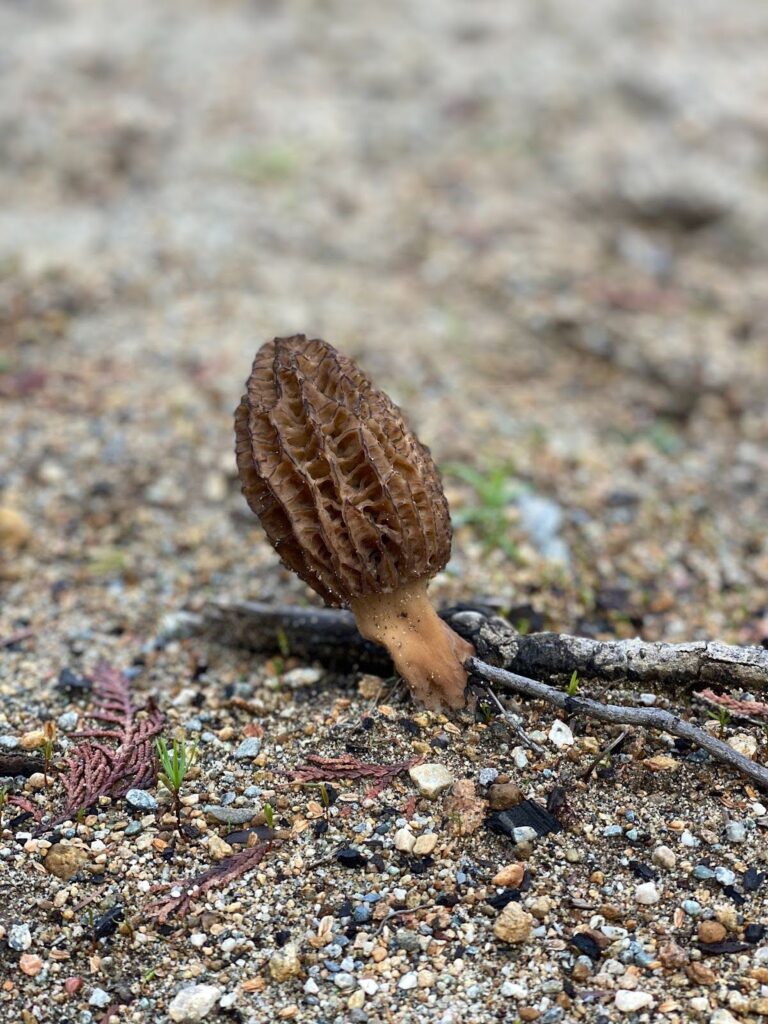
Black Morel
The Black Morel has a distinct look to it, its cap is coned and has many pits and ridges giving it a wiggly appearance. The cap and stem form one single, continuous chamber, this is important to note as the poisonous lookalikes are multichambered, so this is a good way to tell them apart.
The Black Morel typically grows in non burned hardwood forests. However, some species of morels are known as “Burn Morels” and grow in the years after a forest fire has occurred. If looking for these mushrooms, it is important to be aware of your surroundings as burn sites can pose hazards.
Morel mushrooms have a rich, woody scent and must be completely cooked to be considered safe to eat. Sauteeing the mushroom in butter can help highlight the flavour and can then be added to several dishes like pastas or pizza.
Chicken of the Woods
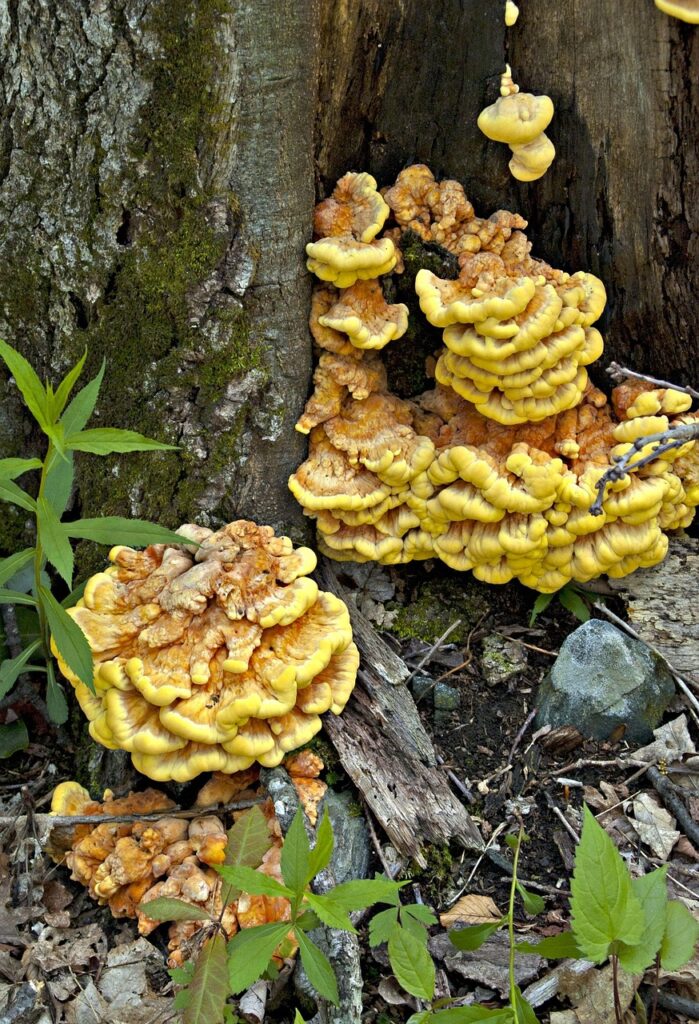
Chicken of the Woods is a very popular and easy to spot mushroom. It grows as shelves and the cap is fanned and orange with yellow bands. The underside of the mushroom has small, yellow pores. It is important to note that Chicken of the Woods grows on conifer trees. It has an unpleasant lookalike that grows on hardwood trees instead. Another lookalike has a reddish cap that is not banned yellow like the Chicken of the Woods. It is safe practice to consult a guide when IDing.
Chicken of the Woods must be fully cooked before eating, and younger specimens are recommended. It is meaty in texture and can have a mild lemony flavour. It is popular sauteed and served with vegetables.
Oyster Mushroom
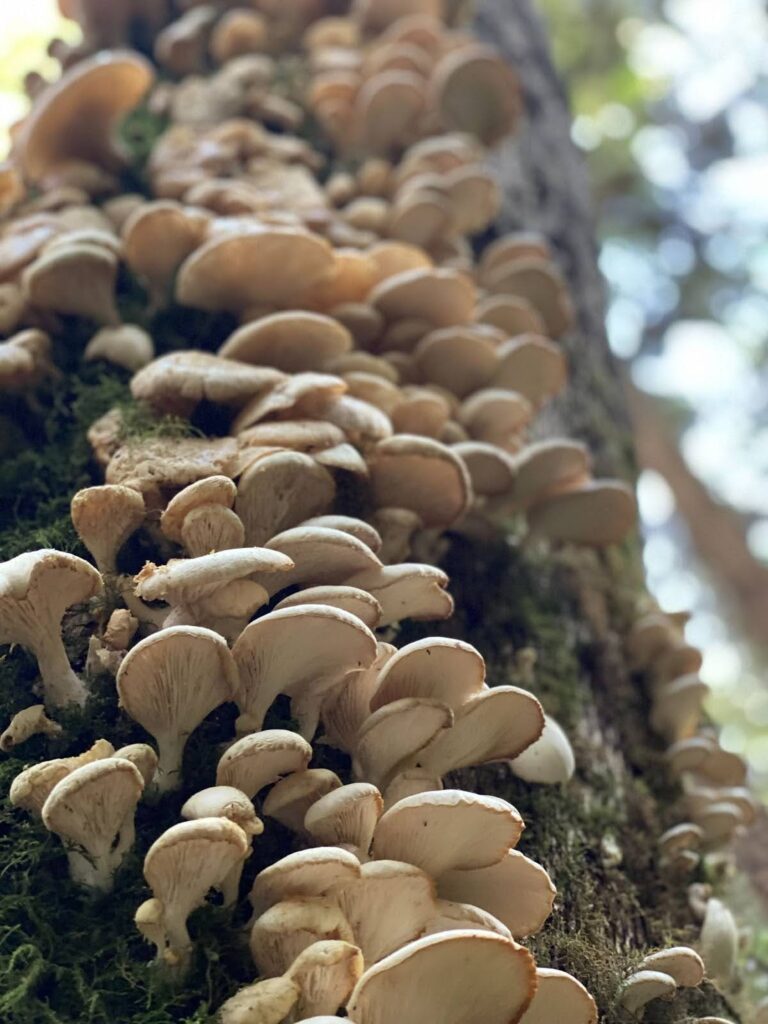
Oyster Mushrooms are a very popular gilled mushroom. They grow in clusters on hardwood trees. The cap is a light brown colour and the gills are not serrated. These mushrooms are becoming more common in grocery stores now, but the colouring may be different as it is cultivated. The Oyster Mushroom does have some lookalikes that vary by type of gill, so it is best to consult a guide when IDing.
The Oyster Mushroom has an almond like smell and a mild but pleasant flavour. These are popular sauteed or fried to imitate fried chicken.
Lion’s Mane
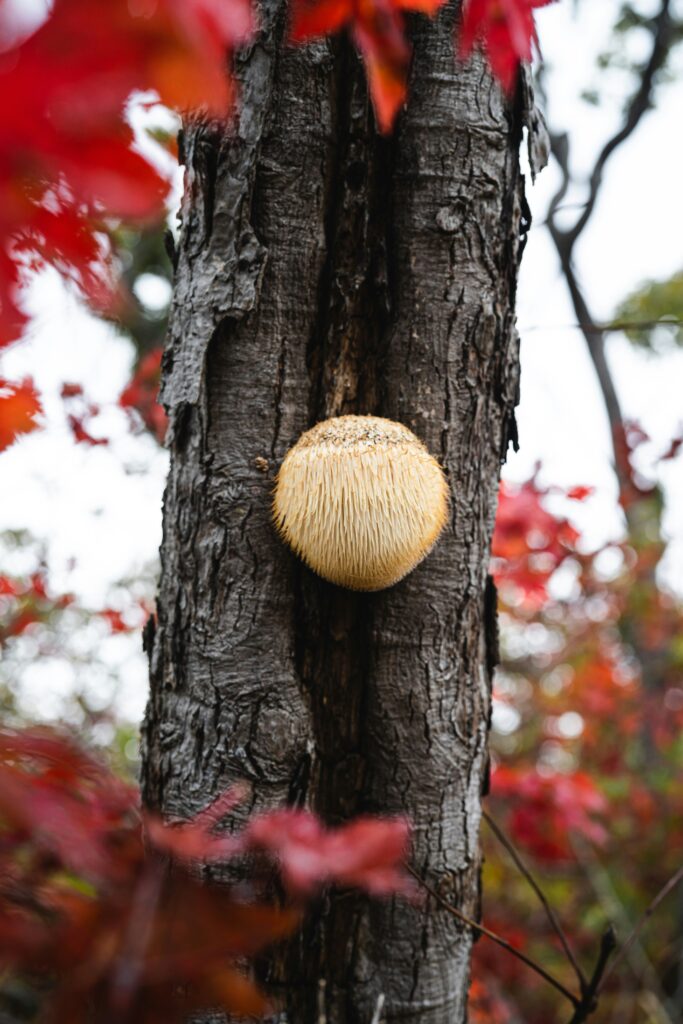
Lion’s Mane mushrooms are very distinct and unique. The fruiting body is a white mass, covered in “teeth” that hang downwards. The surface is white when young, but yellows a bit with age. This mushroom grows on hardwood trees and has no real stem, the fruiting body is directly attached to the host tree.
Lion’s Mane mushrooms are best eaten when young and have a white or cream colour. They have a mild smell similar to crab meat. It is commonly fried or sauteed and used in a variety of dishes as a meat replacement. Others prefer to dry the mushrooms and package them into capsules to use for their cognitive benefits.
Cauliflower Mushroom
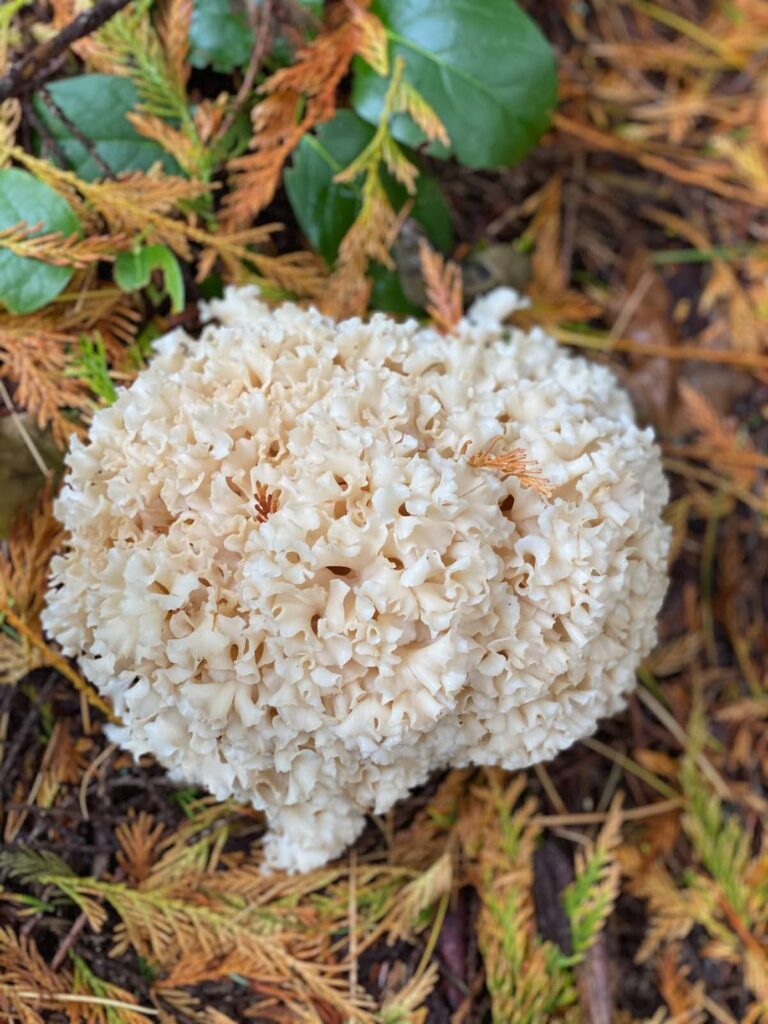
The Cauliflower Mushroom is white or cream, maturing to a buff colour. It has flattened leaf-like branches arranged in a large mass. It is crinkled and contorted from unbranched cylindrical stalks. The surface is smooth, with firm flesh. It grows on the ground, in mature coniferous forests near stumps or the base of trees, specifically Douglas Fir or Pines. It looks like a head of cauliflower! It is sometimes confused with the Coral Mushroom species, so be aware of that when identifying. If harvesting, cut the base at ground level, leaving the base in the ground. This will allow the species to fruit year after year at the same site. It has a sweet, apricot-like smell. It is delicious pan-fried in butter until it is a little crispy on the edges!
Sources:
Cervenka, Tom. Wild Edible Mushrooms of British Columbia. 3rd ed., Northern Bushcraft Publishing, 2019.
Kellyclampitt. “Fungi Chicken of the Woods Mushroom.” Pixabay. https://pixabay.com/photos/fungi-chicken-of-the-woods-mushroom-2069479/
Kevinsub. “King Bolete Mushroom.” Pixabay. https://pixabay.com/photos/king-bolete-mushroom-green-king-2050796/
Kornakov, Artur. “A tree with a ball hanging from its trunk.” Unsplash. https://unsplash.com/photos/a-tree-with-a-ball-hanging-from-its-trunk-gqTd5MSZaHc
MacKinnon, Andy, and Kem Luther. Mushrooms of British Columbia. Royal BC Museum, 2021.
Sept, J. Duane. Common Mushrooms of the Northwest. Rev. ed., Calypso Publishing, 2012.